In my undergraduate graphic design classes, I often ask students not to design.
It is a strange and unexpected request in a design classroom, and it immediately unsettles some of them. After all, students typically enter a graphic design course with a familiar set of expectations: combine personal experience, visual references, technical skills, and imagination to create a resolved visual outcome.
The process is well known. One gathers research, applies software and technical knowledge, develops imagery and typography, and constructs a visual solution—perhaps a poster, publication, logo, cover design, or broader visual system. The work is presented to the class and instructor, critiqued, refined, graded, and eventually placed into a portfolio with the hope that it will one day lead to employment within the marketplace.
To ask students to step away from that process, even temporarily, can seem irrational, even contradictory to the purpose of a design education.
But what I am really asking students to do is suspend the immediate urge to resolve. I want them to pause before arriving at an answer. Before composing layouts, choosing typefaces, or constructing polished visual systems, I ask them to spend time observing, questioning, researching, sketching, collecting, experimenting, and reflecting. I want them to become comfortable existing within uncertainty rather than rushing toward conclusion.
Design students often feel pressure to produce finished work quickly, particularly within a culture increasingly shaped by efficiency, software fluency, templates, and immediate visual output (hello, AI). Yet meaningful design rarely emerges from speed alone. It develops through investigation, hesitation, experimentation, failure, and sustained reflection on the visual problem itself.
One of the most difficult things to teach in graphic design education is to fight preconceived notions of what a finished design piece should be. Preconceived notions of what a finished assignment should be becomes a barrier to one’s imagination and design potential. I understand how this does not correlate with the transactional nature of capitalism. However, in the confines of educational study and graphic design learning, the potential to see the extents of one’s creativity, to see the unexpected, to see if there is another kind of resonance, to look ahead and possibly foresee other programs that have not yet come forth
To “not design,” then, is not a rejection of design practice. It is an attempt to slow the process down long enough for students to recognize that design is not merely the production of visual artifacts, but a way of thinking, observing, questioning, and understanding relationships between form, culture, communication, and human experience.

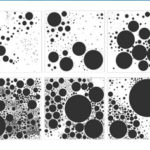
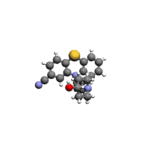
Owl studies — Talia Bergeron, Fall 2022, University of Minnesota, Duluth. Bee studies — Zach Audette, Fall 2022, University of Minnesota, Duluth. Cheetah study, University of Minnesota, Duluth.