Expressing Visual Solutions Through Typography
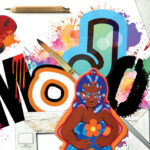
In this project, students designed exhibition posters using expressive typography as the central visual language. Each student selected an artist, scientist, or art movement to research and interpret — visually capturing its energy, mood, and conceptual essence through abstracted letterforms and original typographic composition.
Importantly, students were not allowed to reproduce existing artworks or images. Instead, they were challenged to convey meaning through typographic experimentation, using the structure, rhythm, and character of type as the core expressive tools. Where needed, students could supplement with self-generated imagery, but only if it extended or echoed their typographic approach.
Research-Driven Design
To inform their creative direction, students investigated their subject’s life, method, and medium. Key questions included:
-
What medium or technique defined the artist’s or scientist’s work?
-
What themes or motifs appear consistently across their career?
-
How can type reflect these ideas both visually and emotionally?
This research served as the foundation for conceptual development. Students were encouraged to explore connections between form and idea, drawing from fine art, science, architecture, and history to develop compositions that carried both semantic clarity and visual abstraction.
Learning Objectives
-
Deepen understanding of typography as an expressive and conceptual tool
-
Strengthen ability to integrate research into visual strategy
-
Develop abstraction, rhythm, and spatial hierarchy within typographic systems
-
Reinforce the relationship between verbal content and visual form in design
Final designs were assessed not only for visual execution, but also for the depth of research, clarity of typographic choices, and the sophistication of each student’s conceptual response.
In select cases, flexibility was granted to students who pushed the boundaries of traditional typographic form in ways that were thoughtful, risky, and rooted in process.
Participating Institutions
The projects shown here were completed by undergraduate graphic design students at:
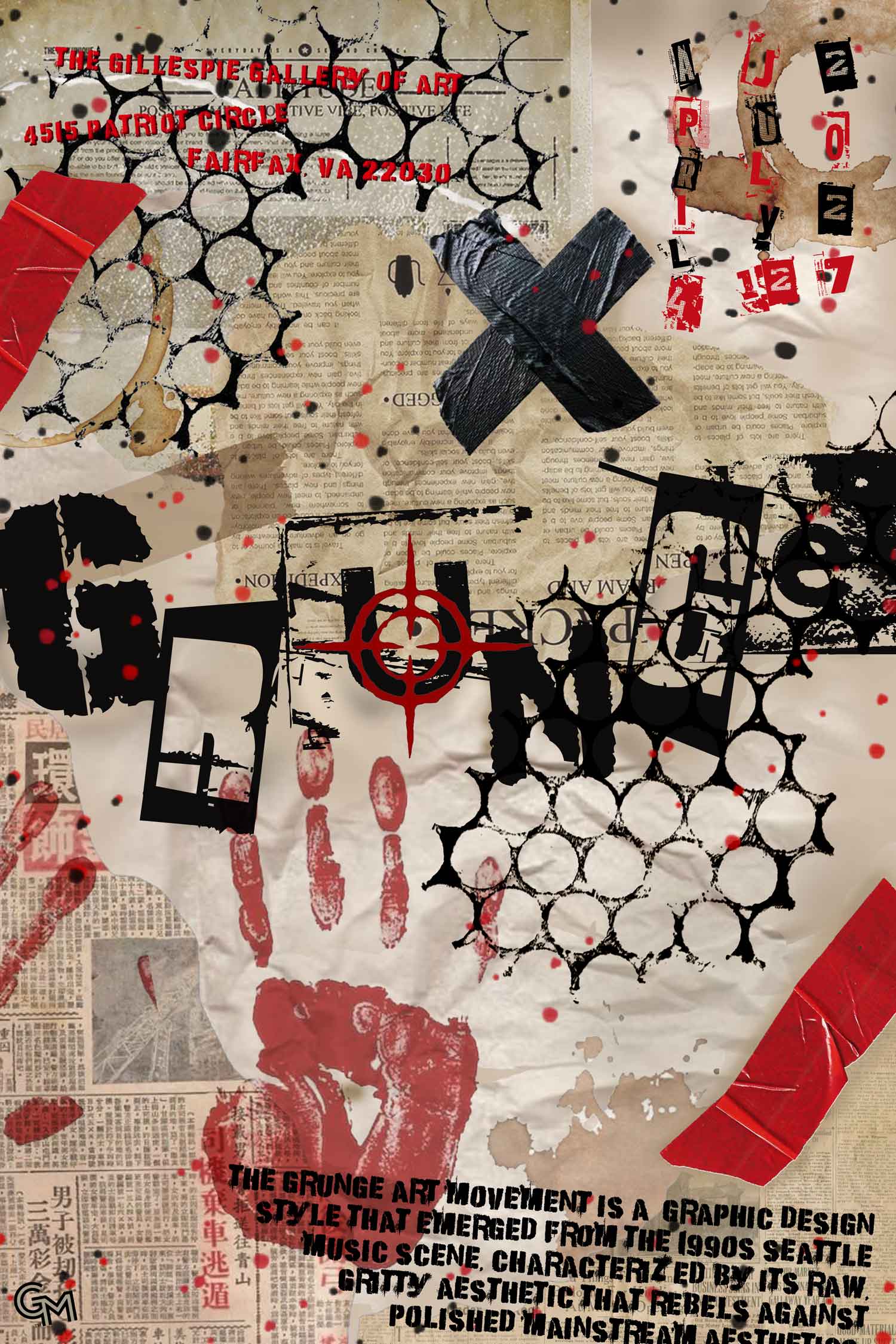
River Le, Fall 2025, George Mason University, Grunge
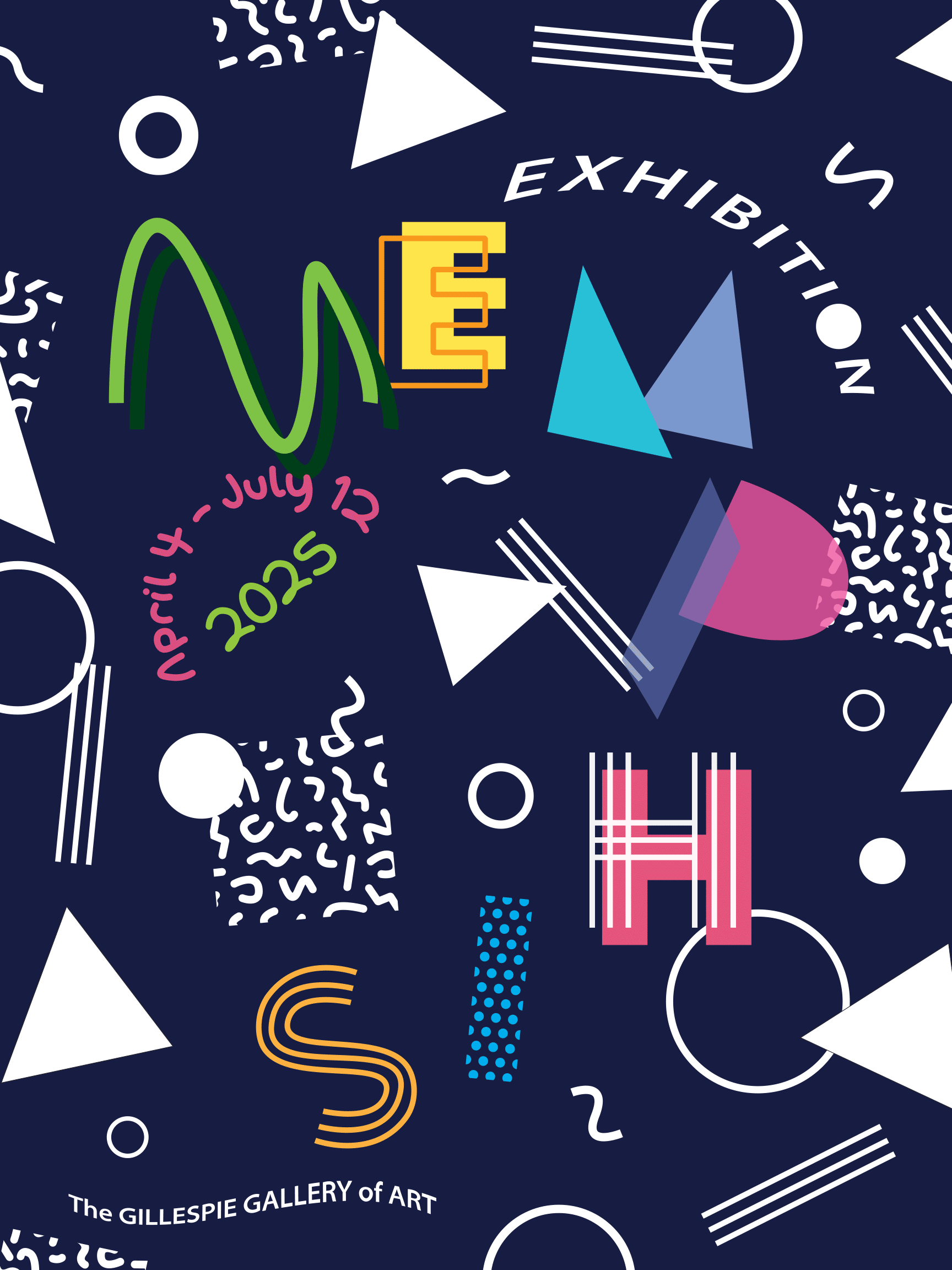
Amelie Garcia, George Mason University, Fall 2024
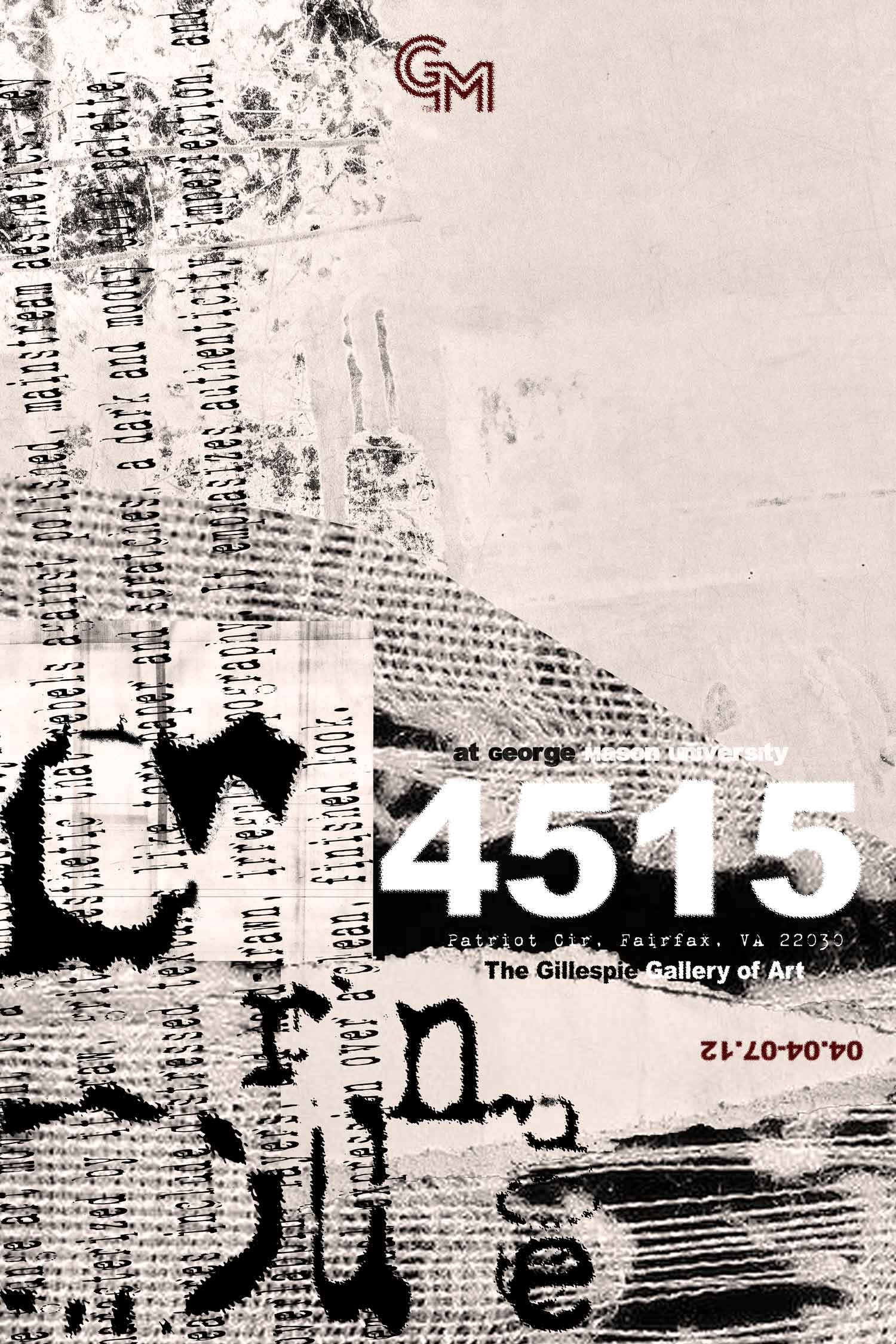
Cata Munoz, Fall 2025, George Mason University, Grunge
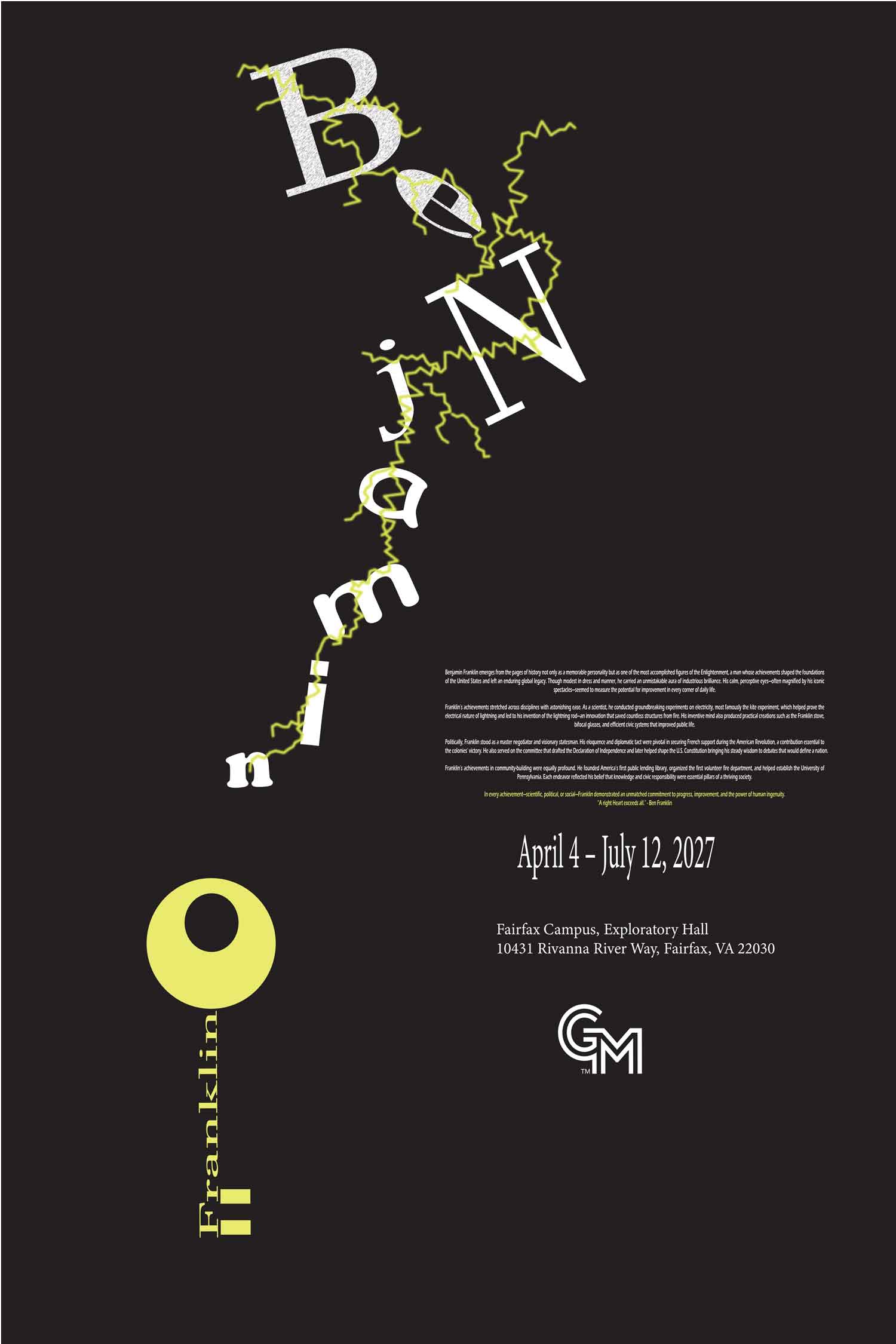
Alexei Lewis, Fall 2025, George Mason University, Benjamin Franklin
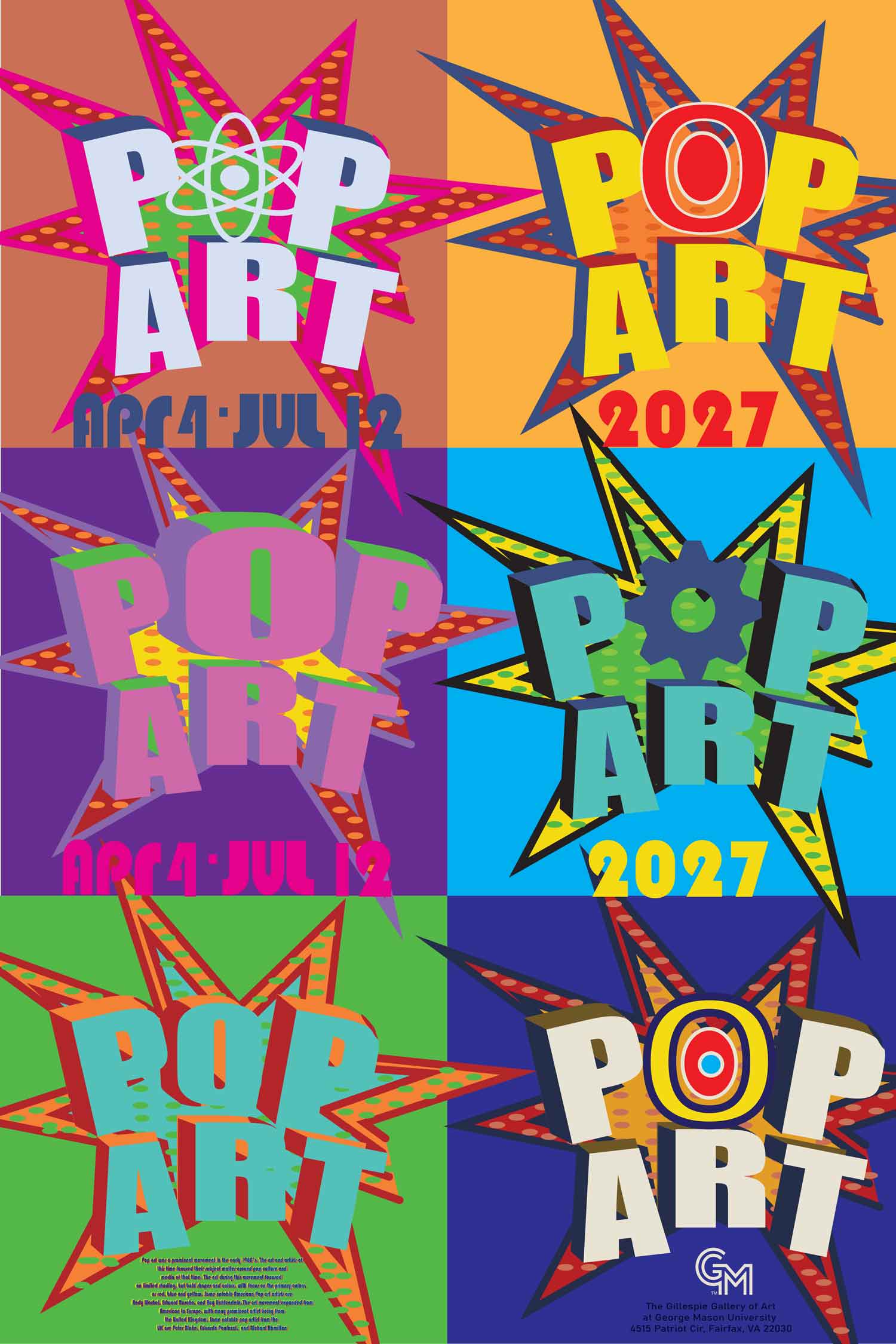
Nija Lorde, Fall 2025, George Mason University, Pop Art
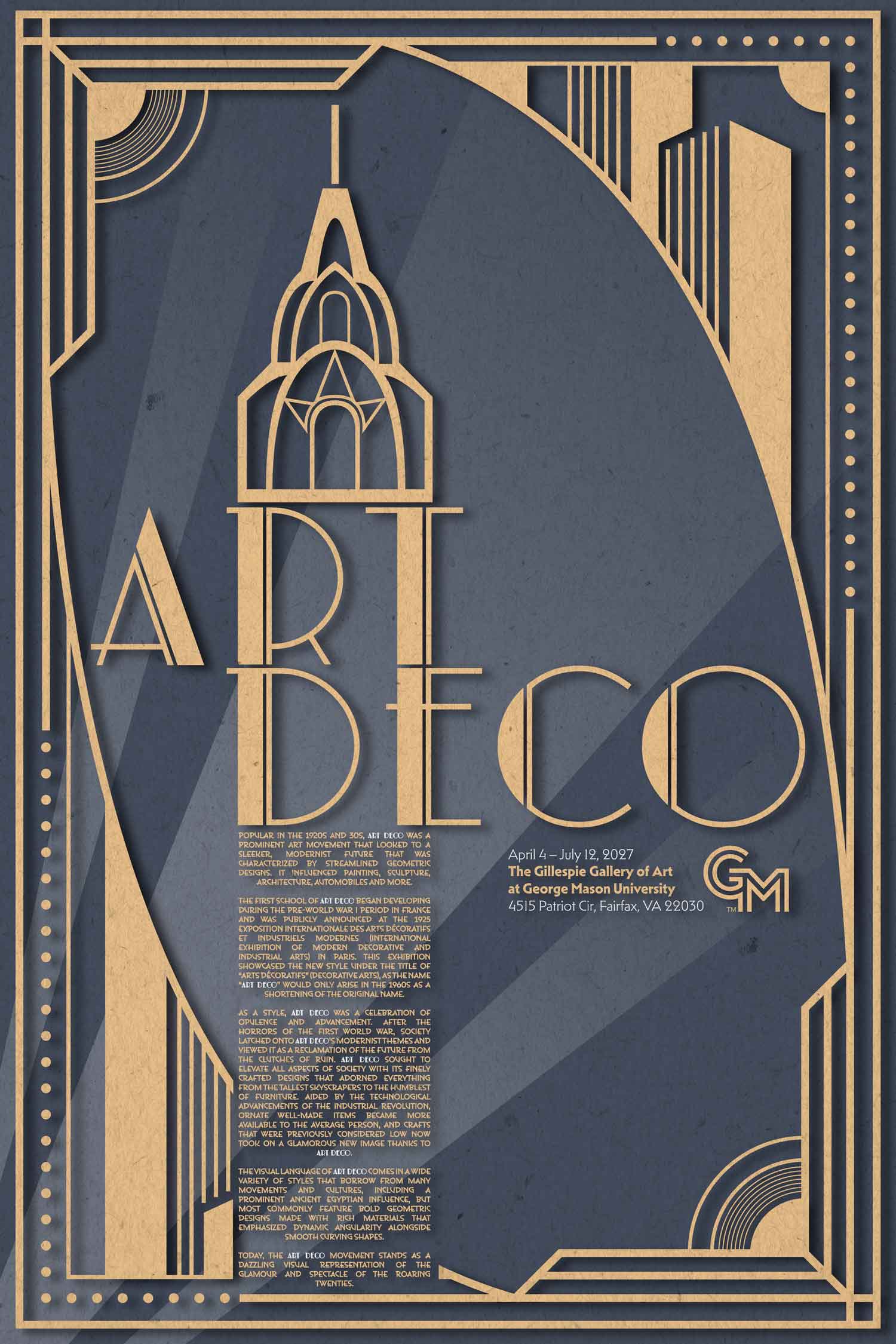
Victor Albertson, Fall 2025, George Mason University, Art Deco
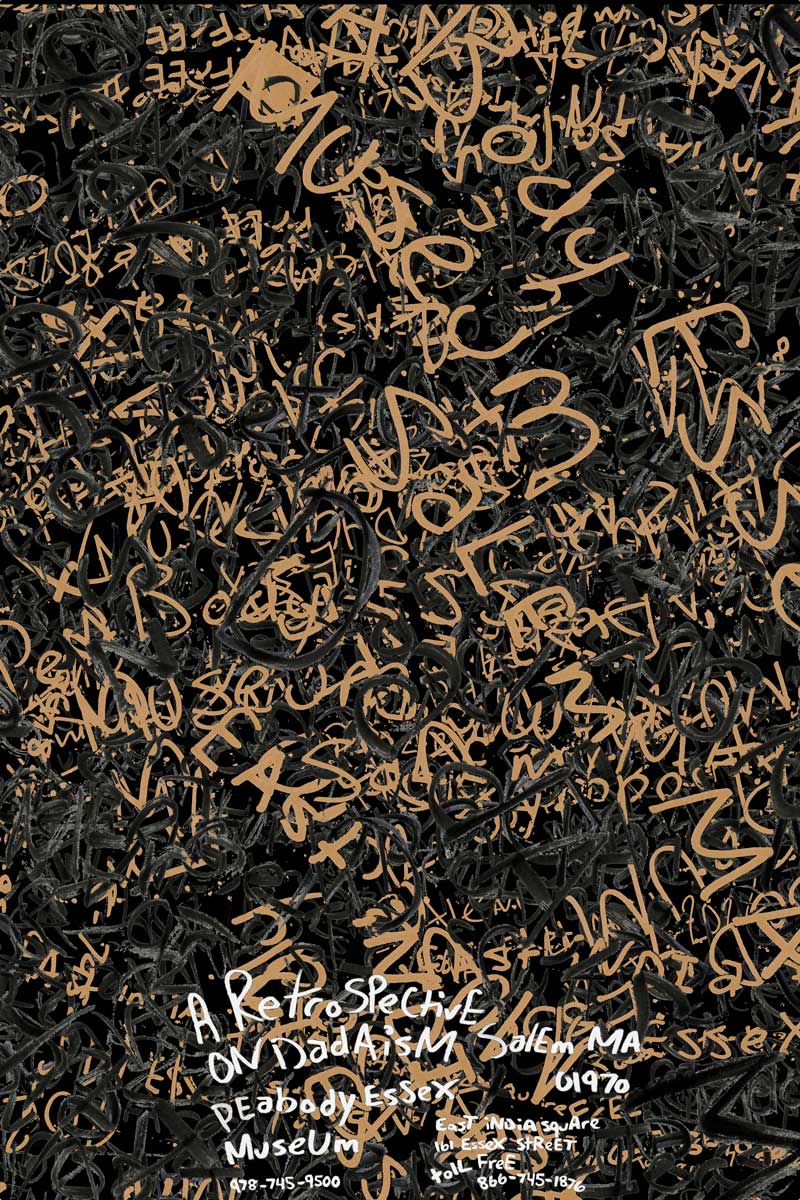
Jessica Saab Dada Poster Montserrat College of Art, 2021
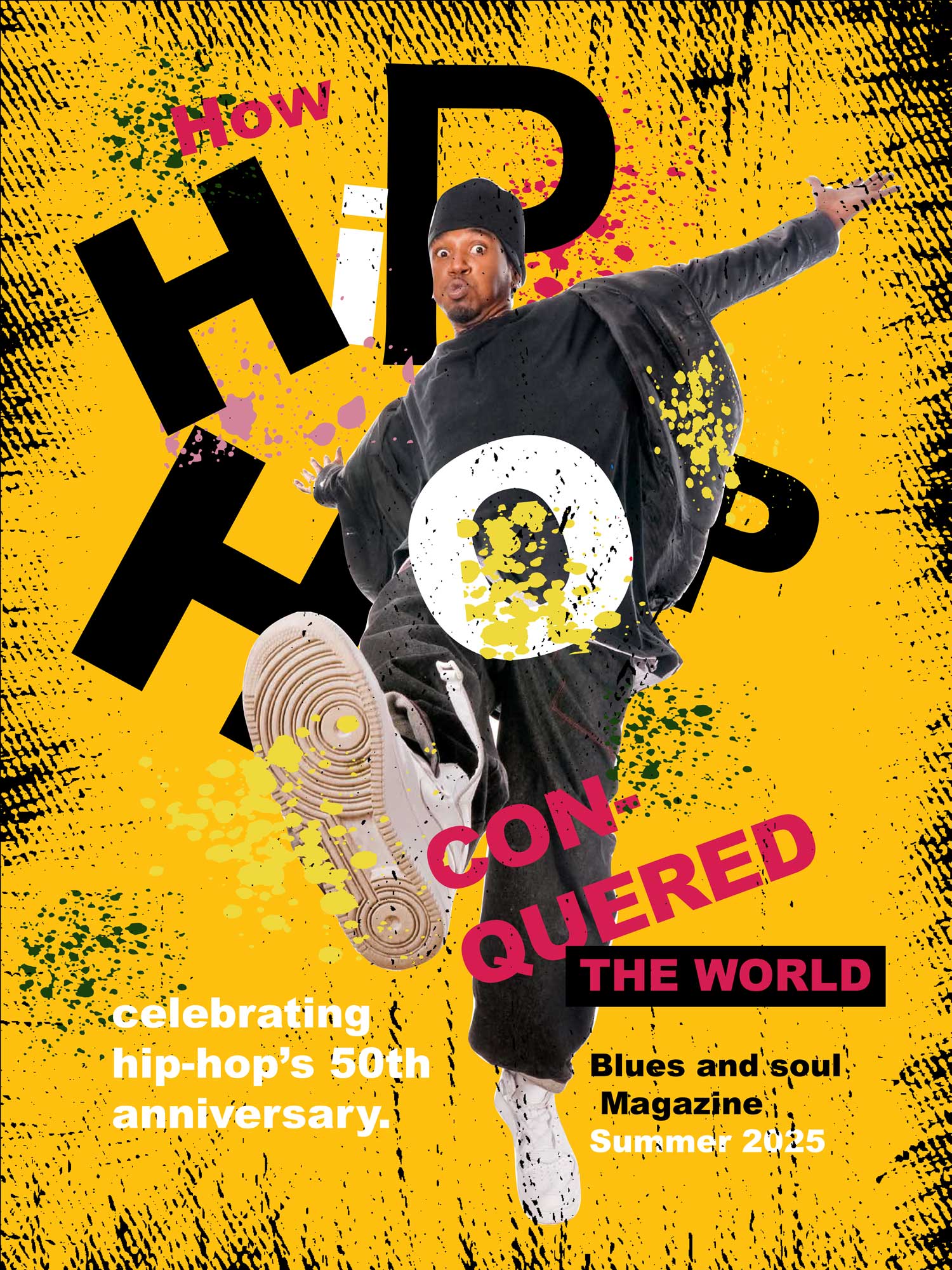
Reagan Namanya, University of the District of Columbia, Spring 2025
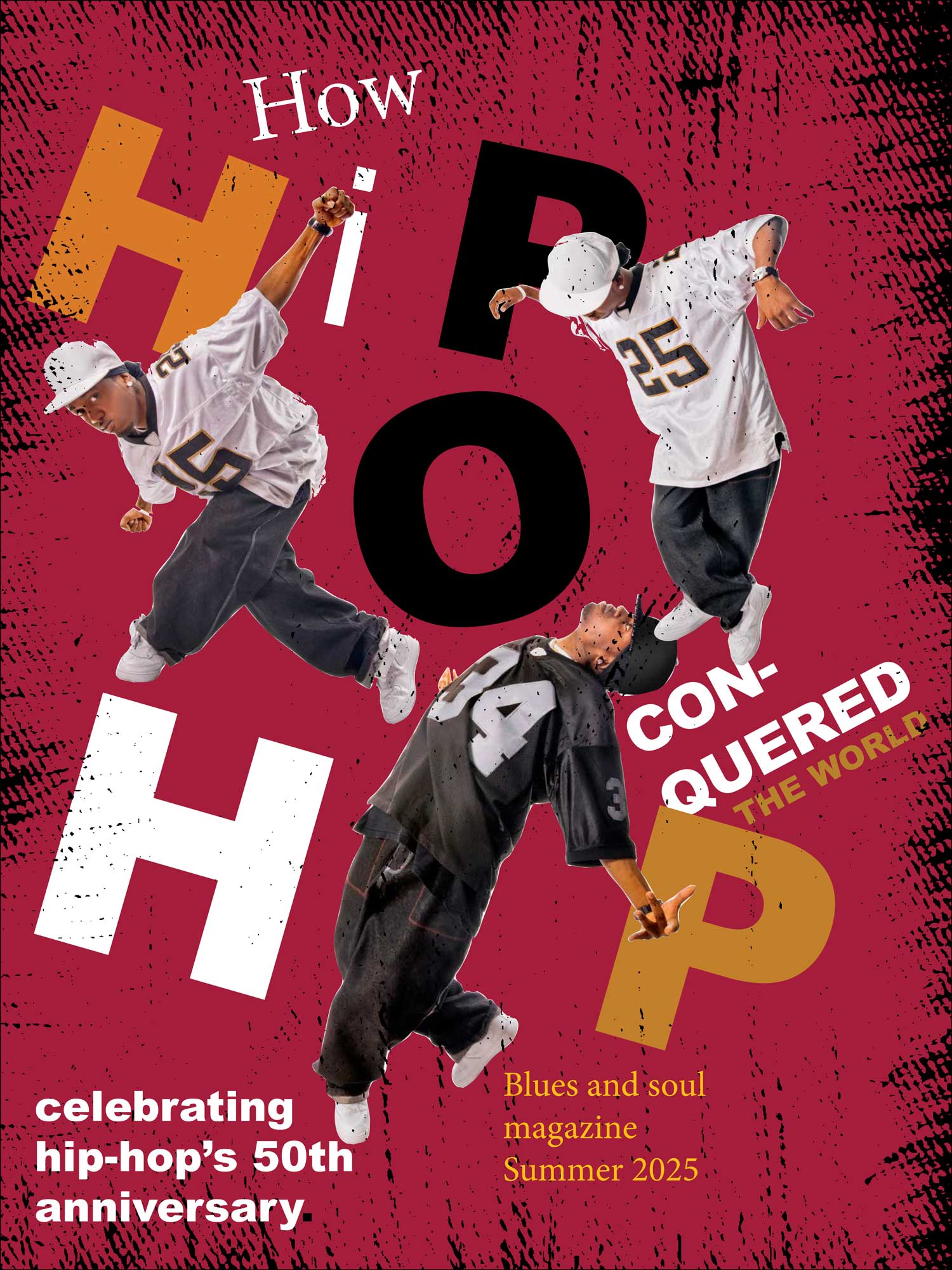
Reagan Namanya, University of the District of Columbia, Spring 2025, v2
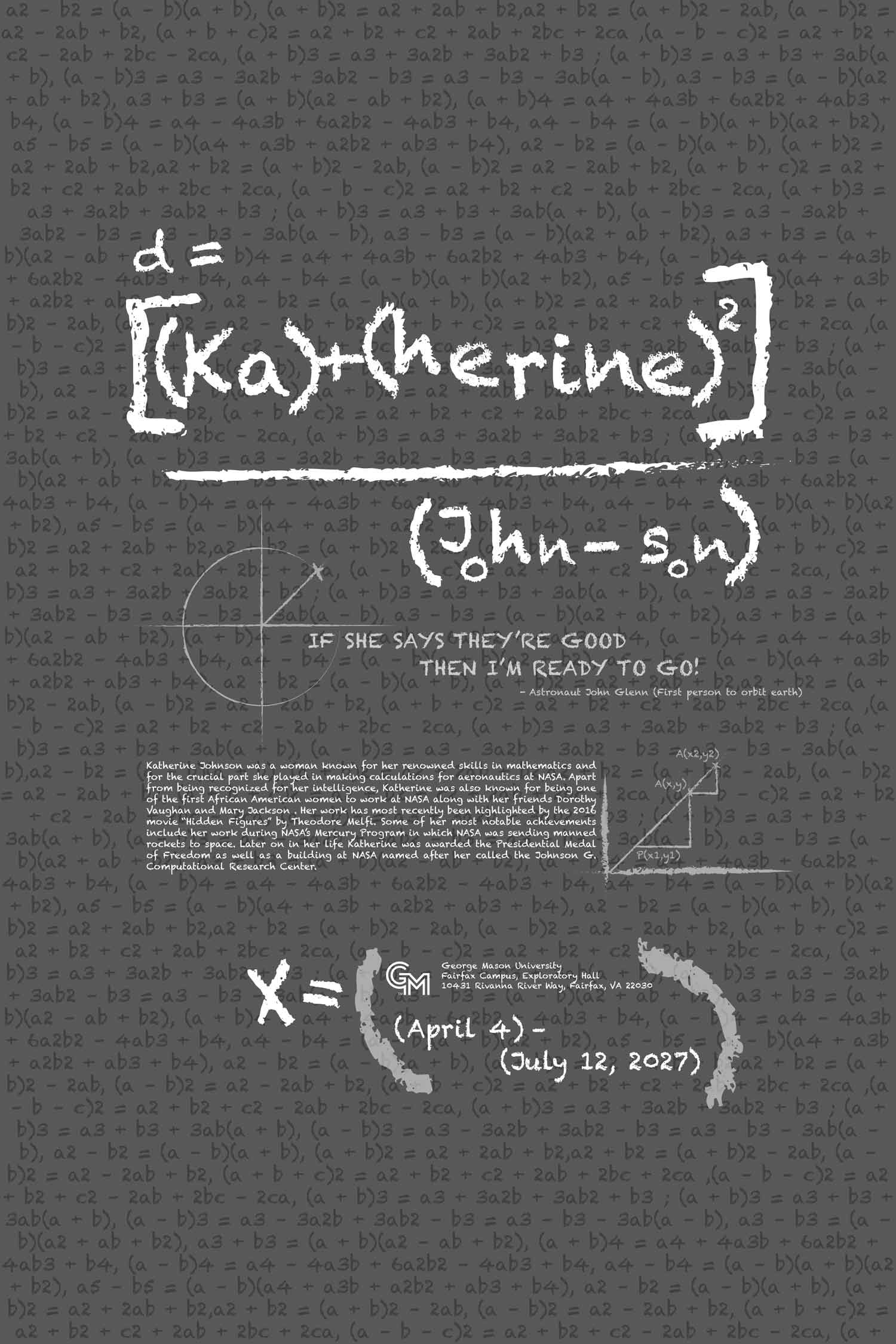
William Caldwell, Fall 2025, George Mason University, Katherine Johnson
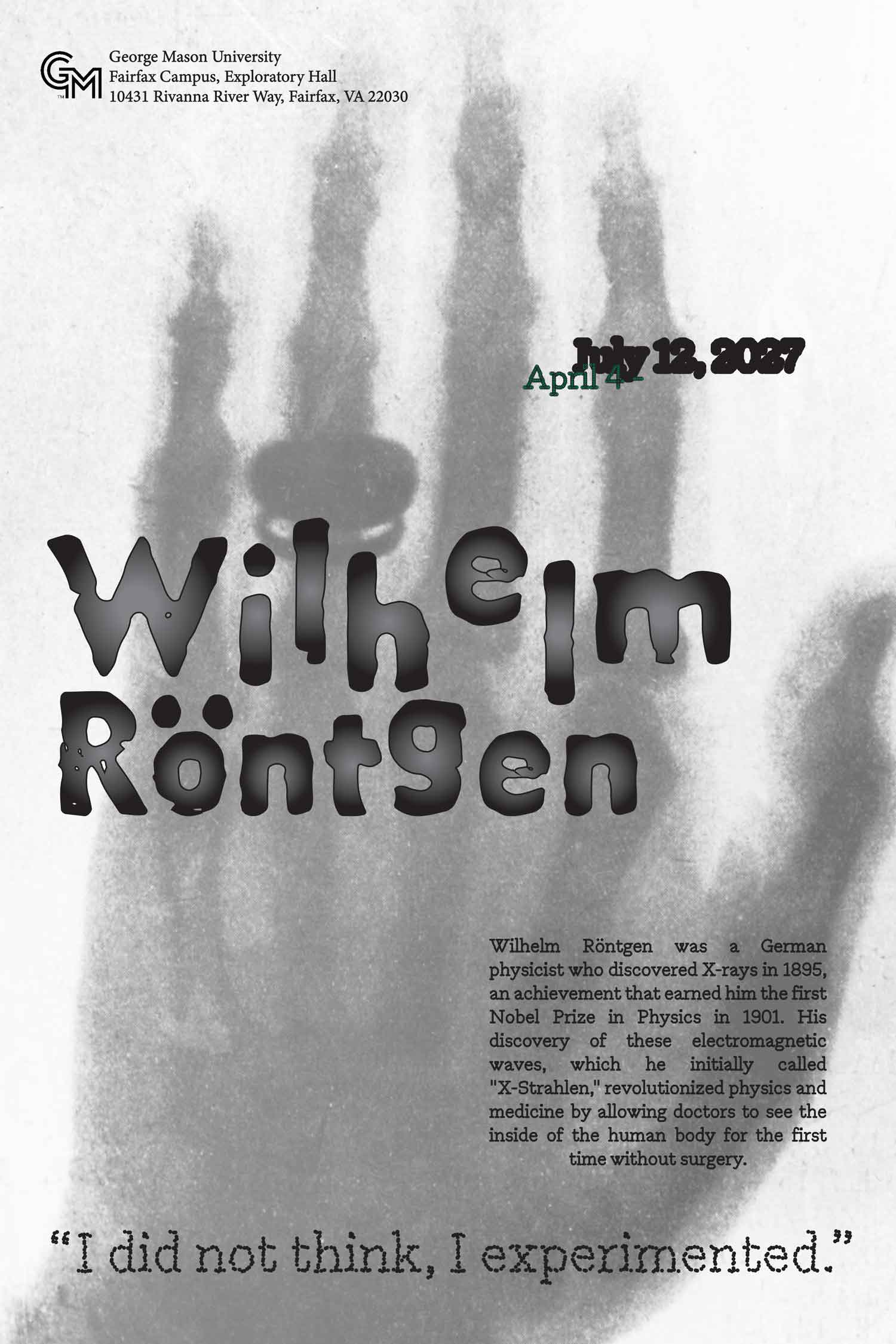
Nazly Elshakankiry, Fall 2025, George Mason University, Wilhem Röntgen
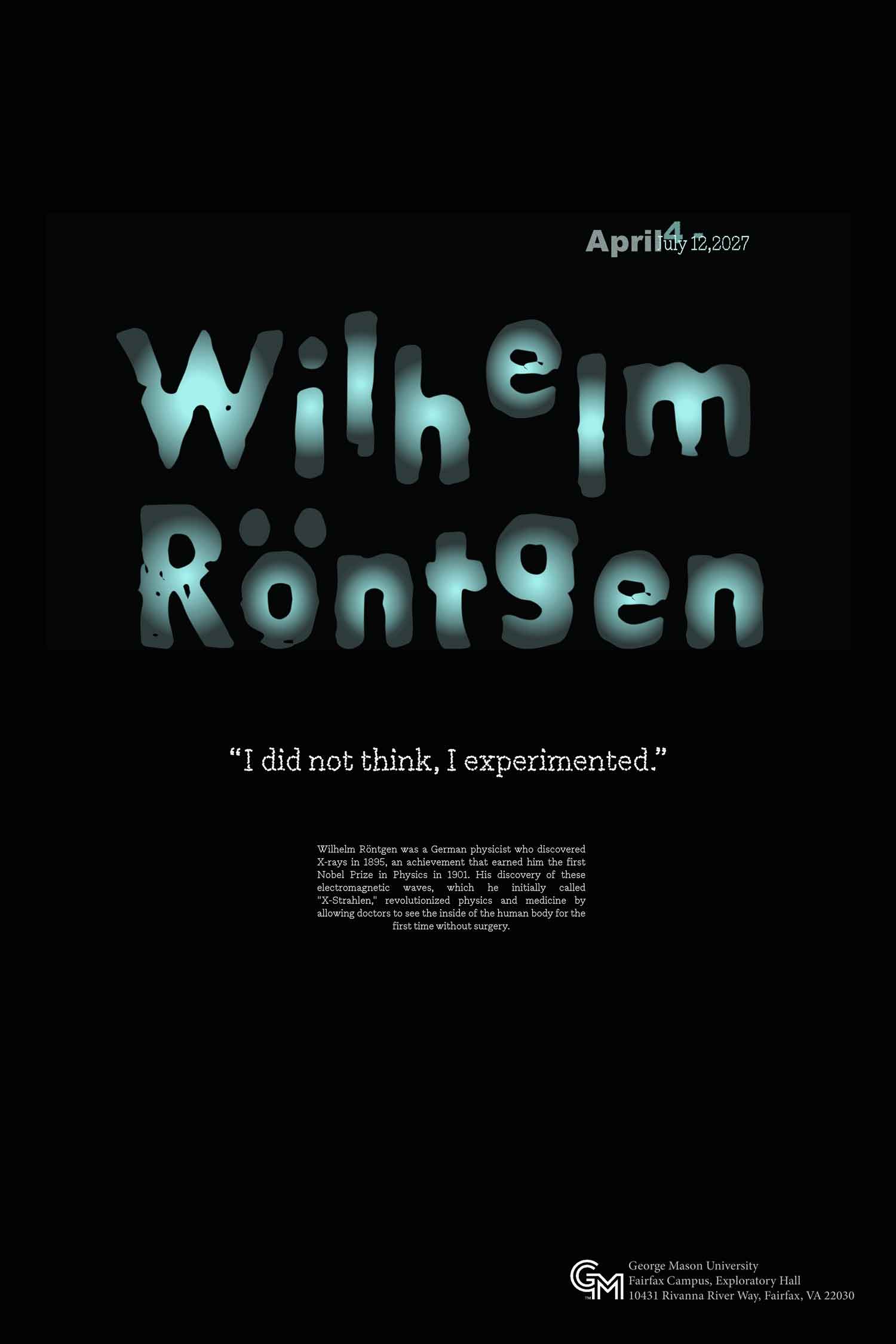
Nazly Elshakankiry, Fall 2025, George Mason University, Wilhem Röntgen
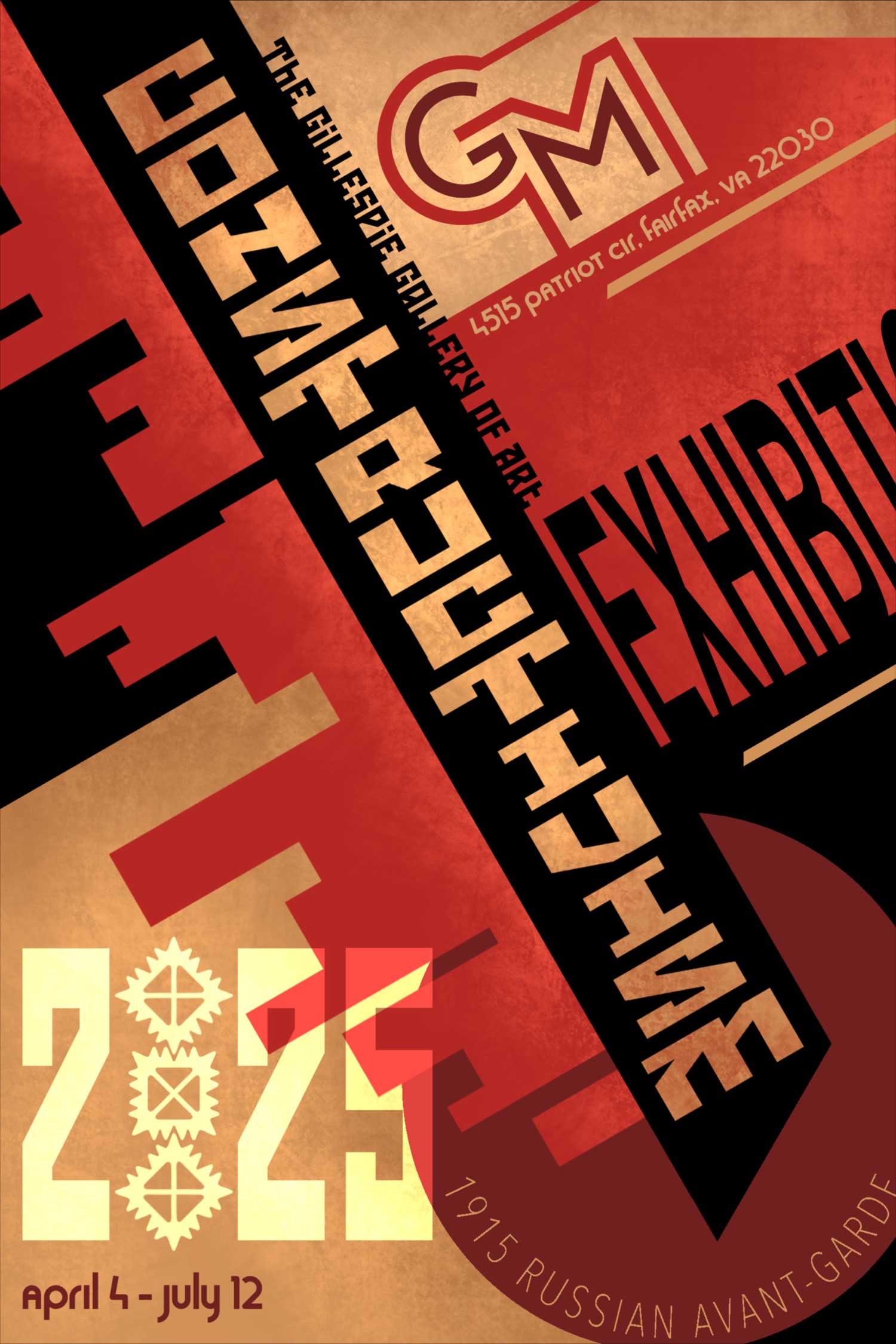
Katherine Nghiem, George Mason University, Fall 2024, poster design
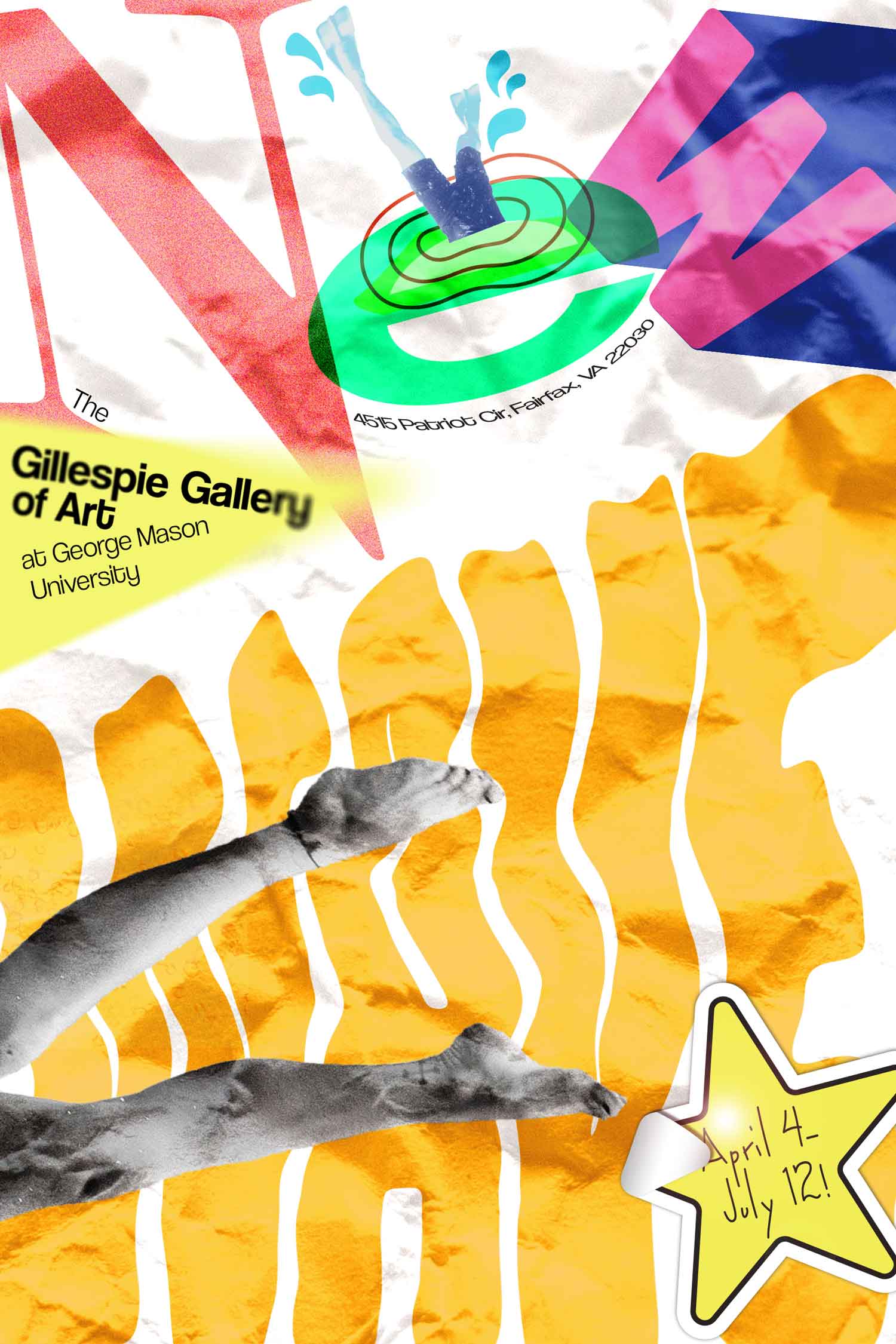
Caitlin Kelly, George Mason University, Fall 2024
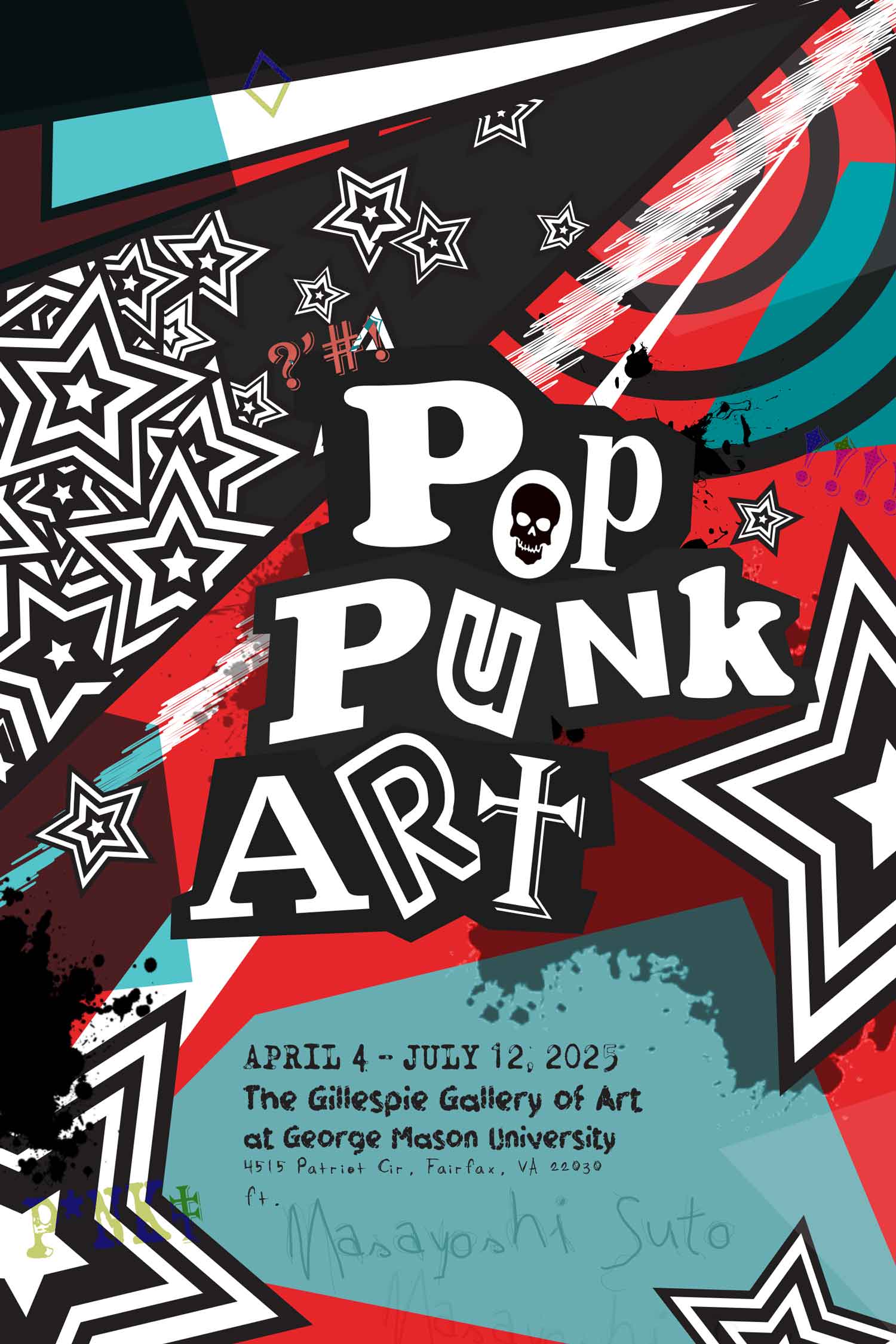
Caitlin Kelly, George Mason University, Fall 2024
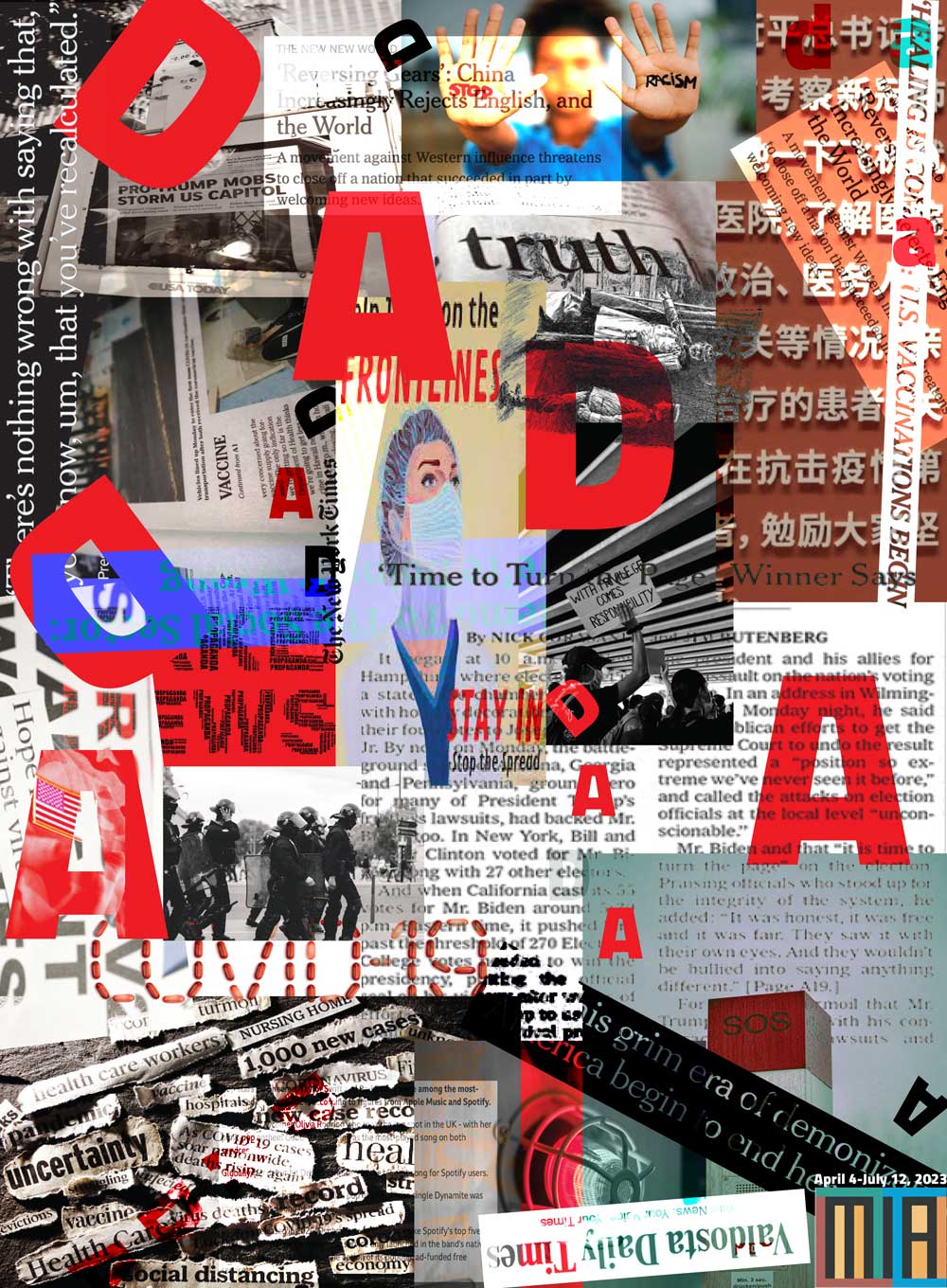
Sara Roof, UMD, Fall 2021
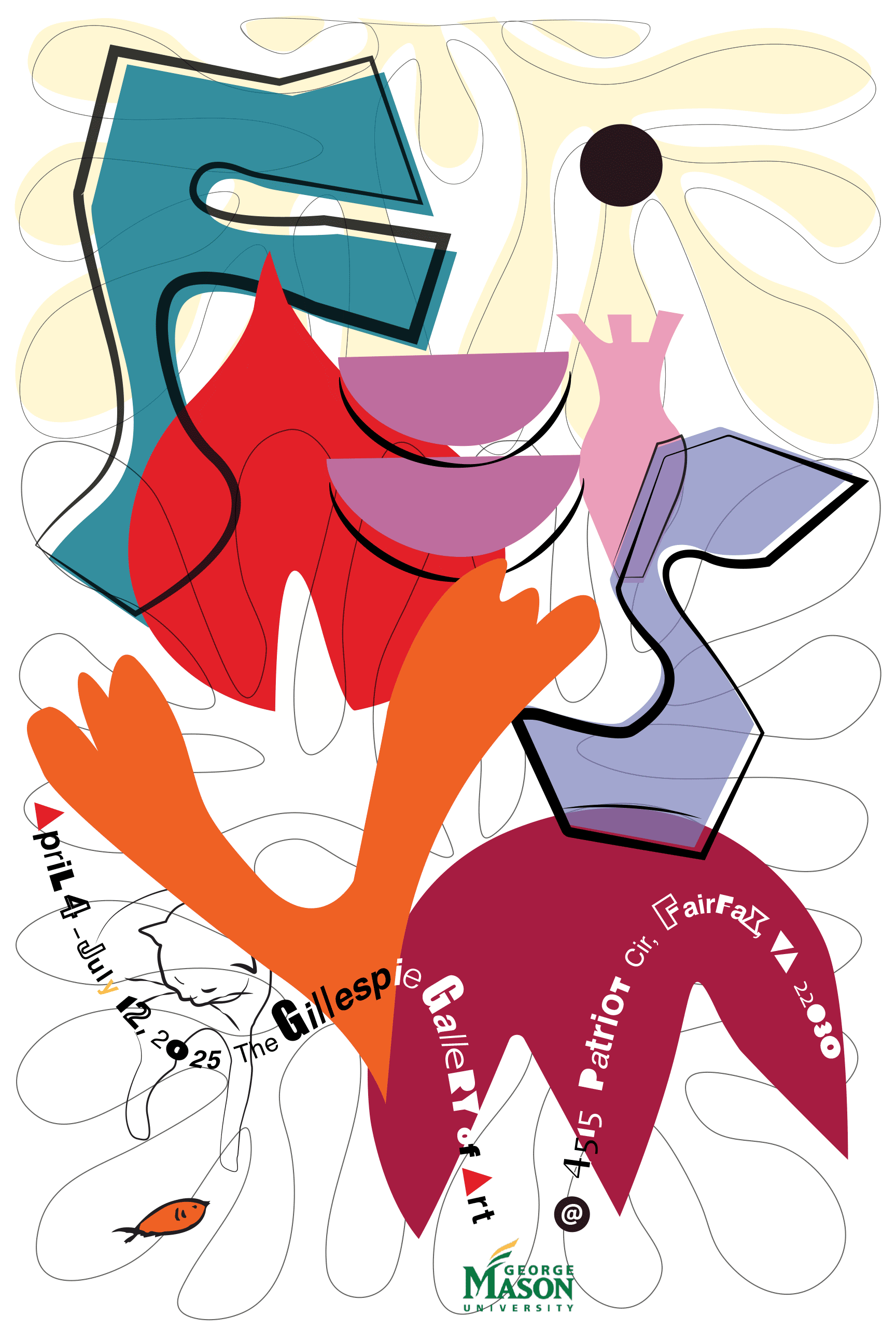
Michelle Miller, George Mason University, Fall 2024
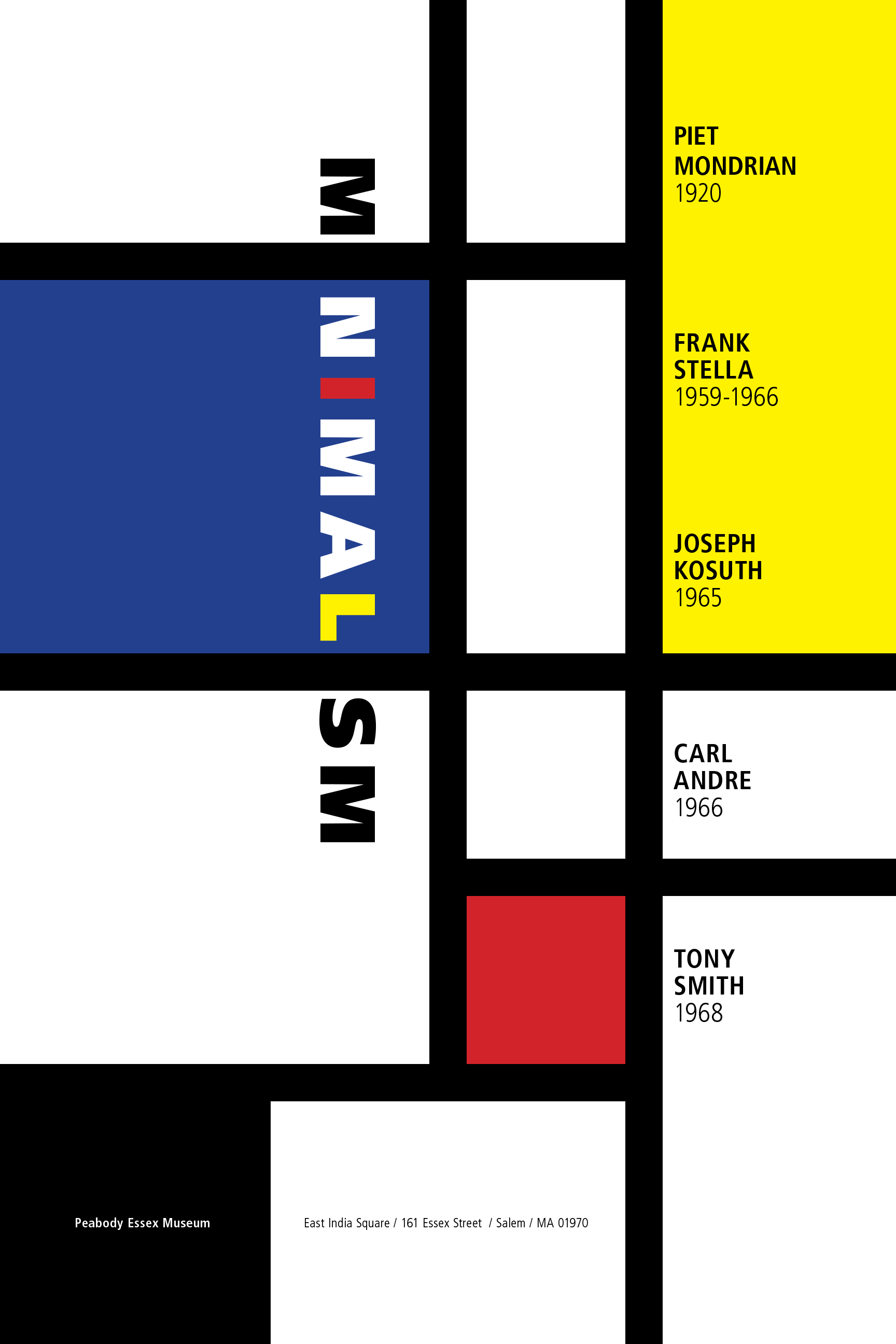
Nate Cioffi, Montserrat College of Art, Beverly, MA, Spring 2019

Emily, Montserrat College of Art, Beverly, MA, Spring 2019
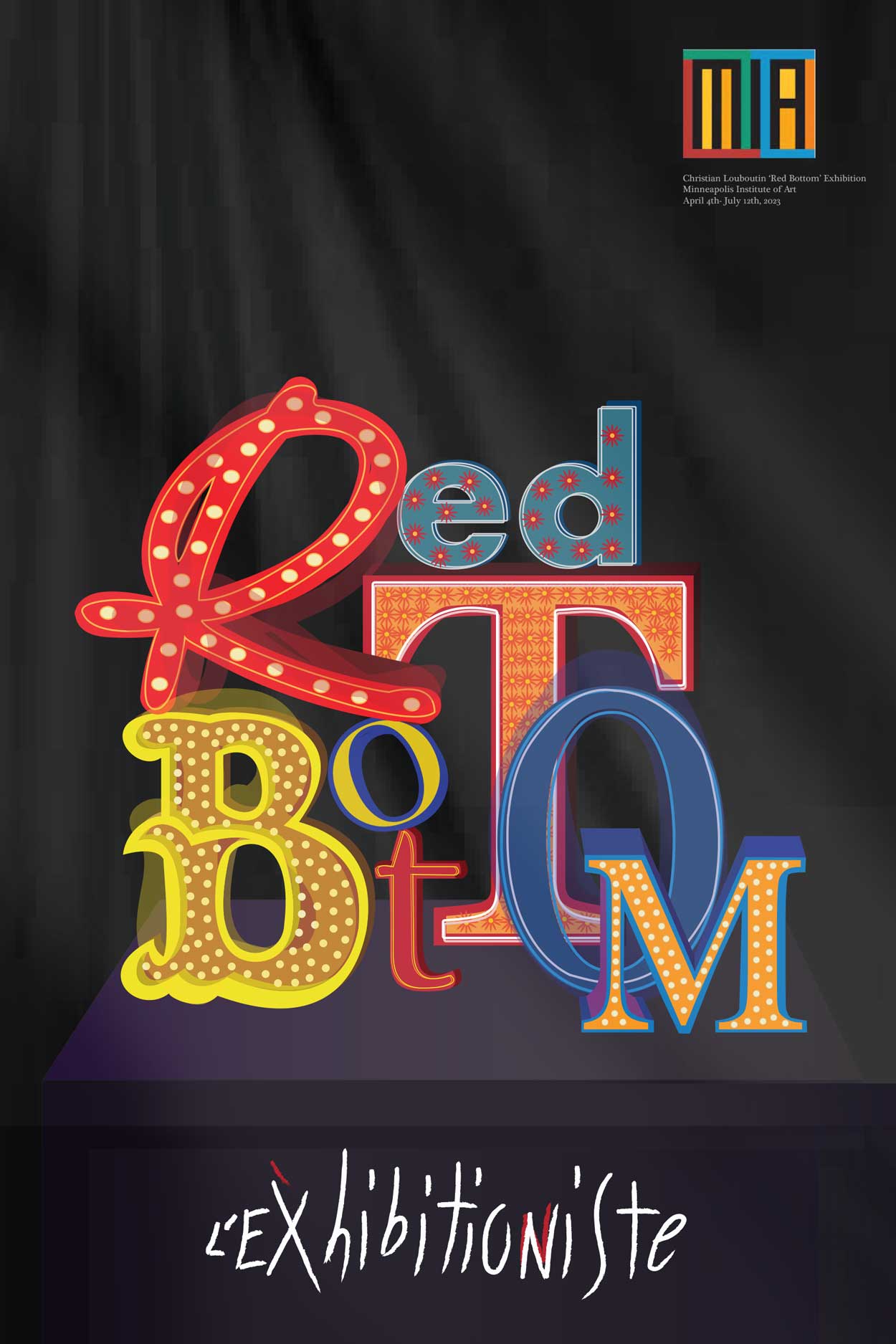
Lindsey Hansen, UMD, Fall 2021
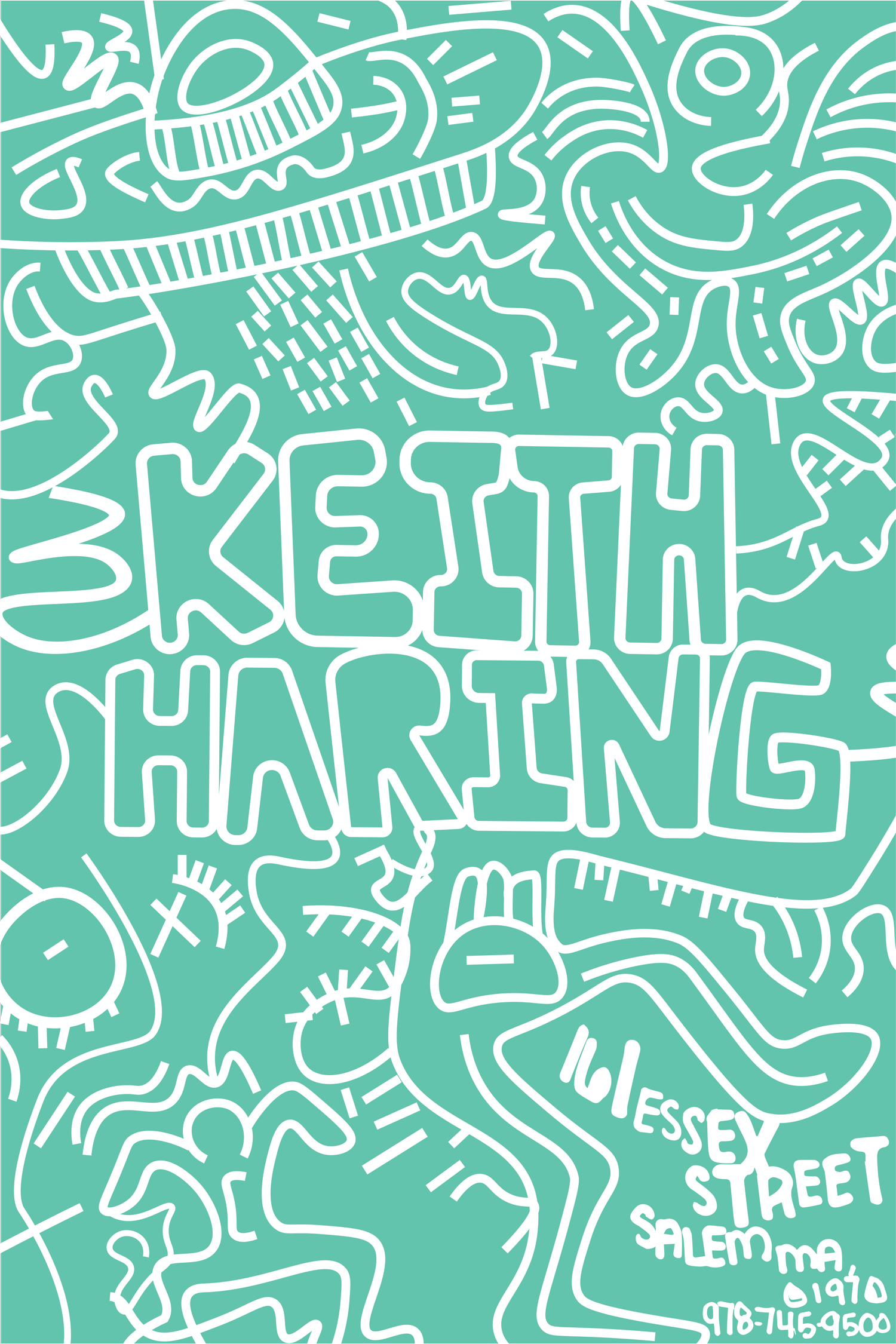
Montserrat College of Art
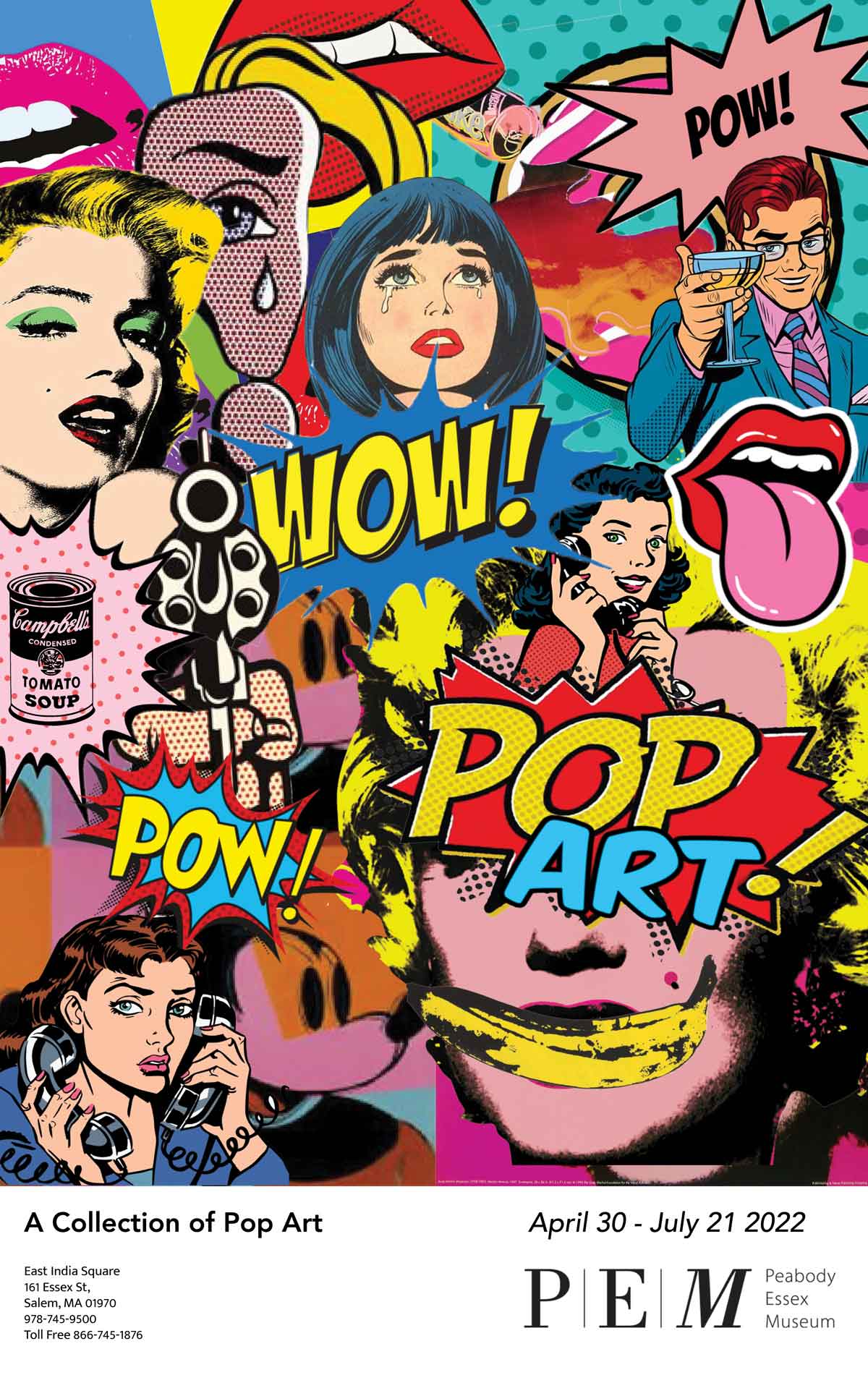
Katie DeSilva, Montserrat College of Art, 2021
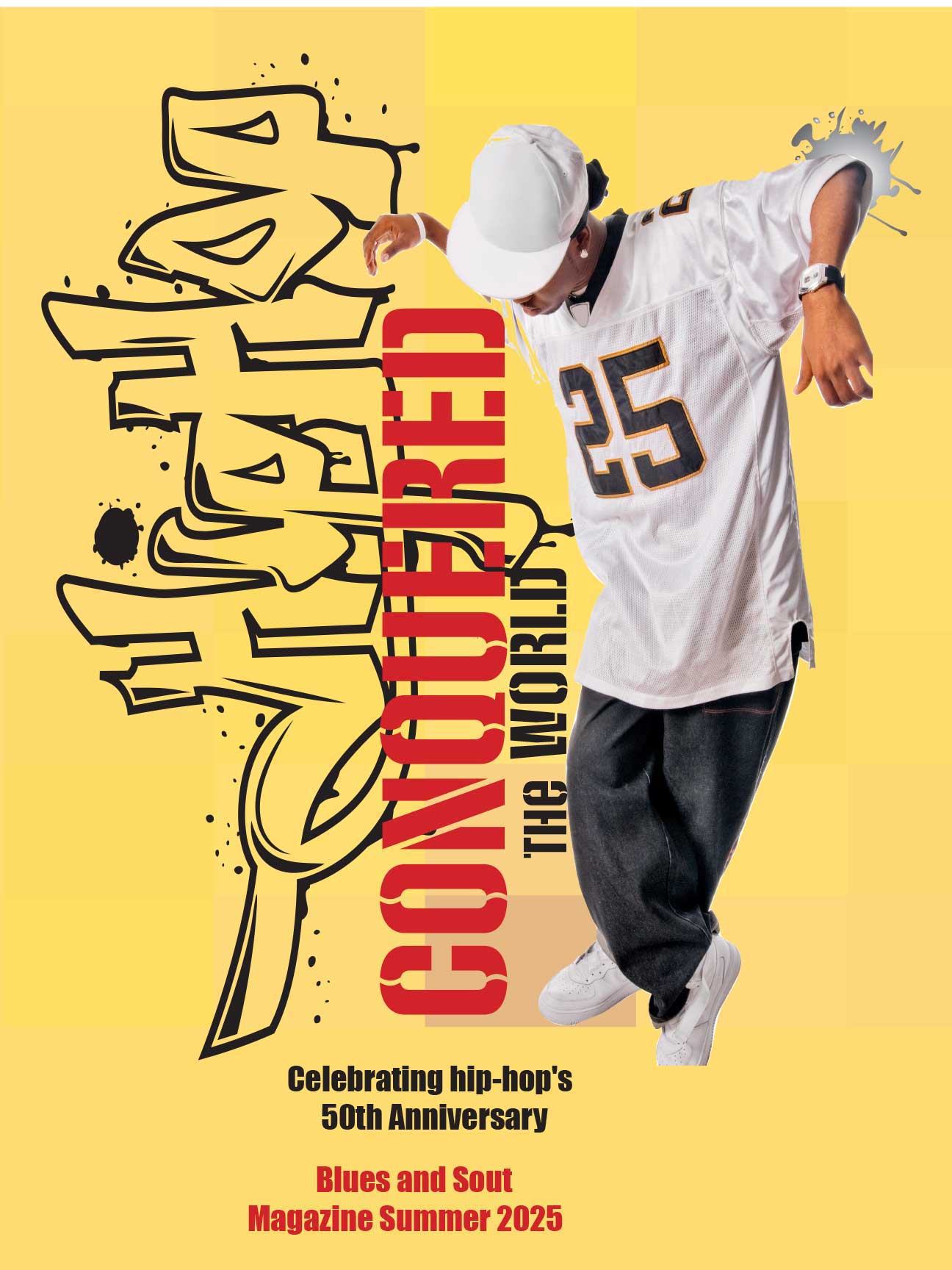
University of the District of Columbia, Spring 2025
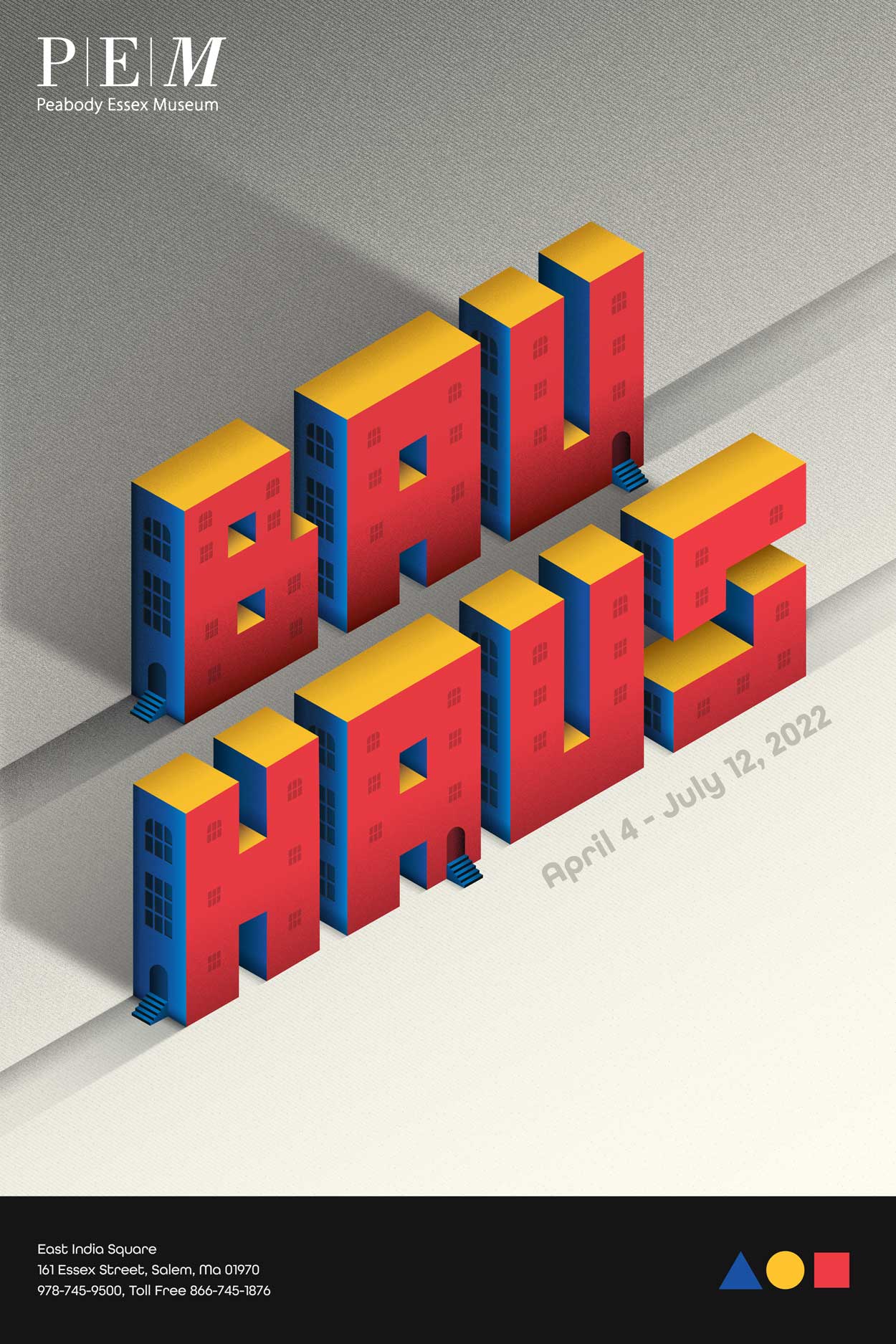
Gervin Rodriguez Bauhaus Poster, Montserrat College of Art, 2021
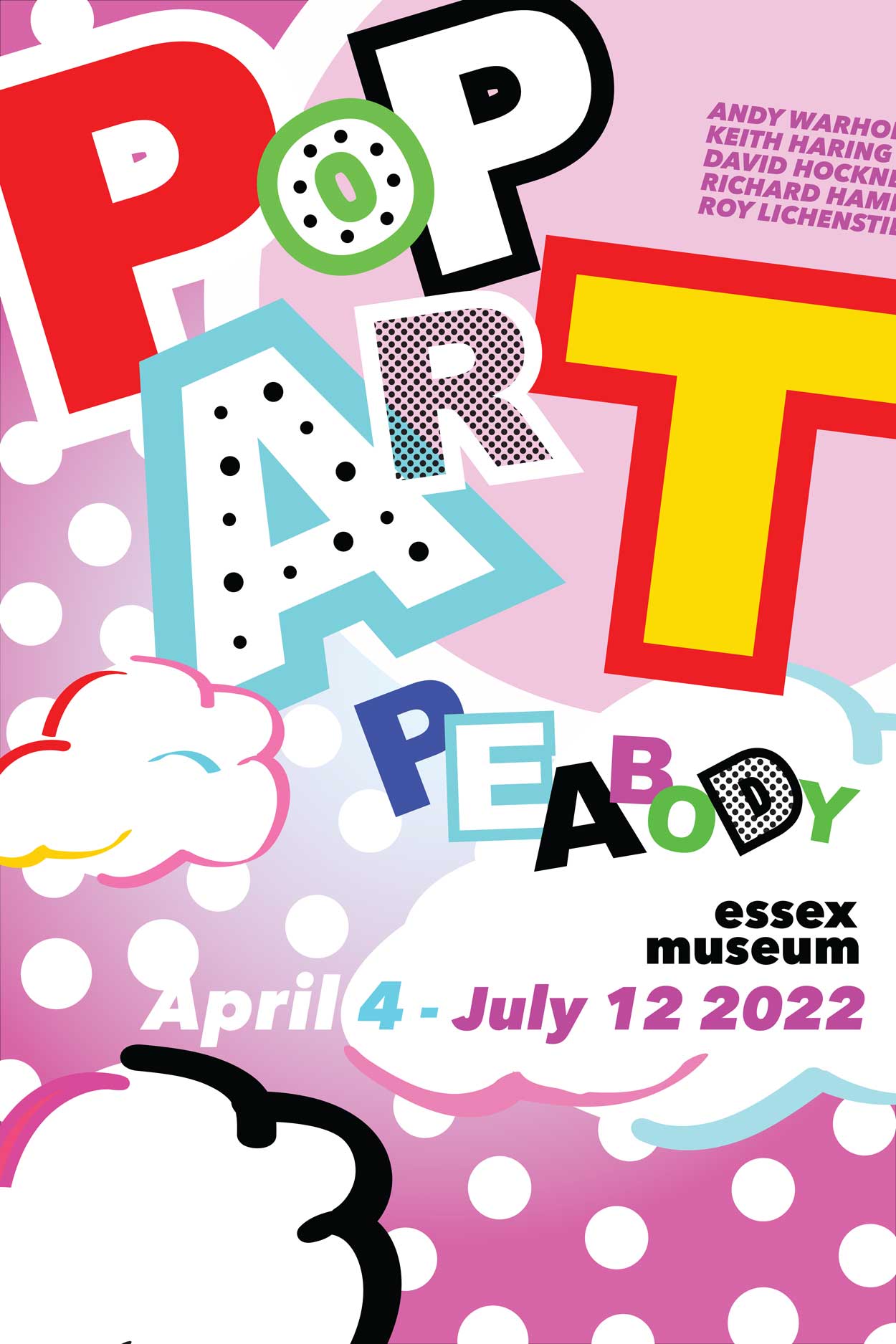
Madison Gerace, Montserrat College of Art, 2021
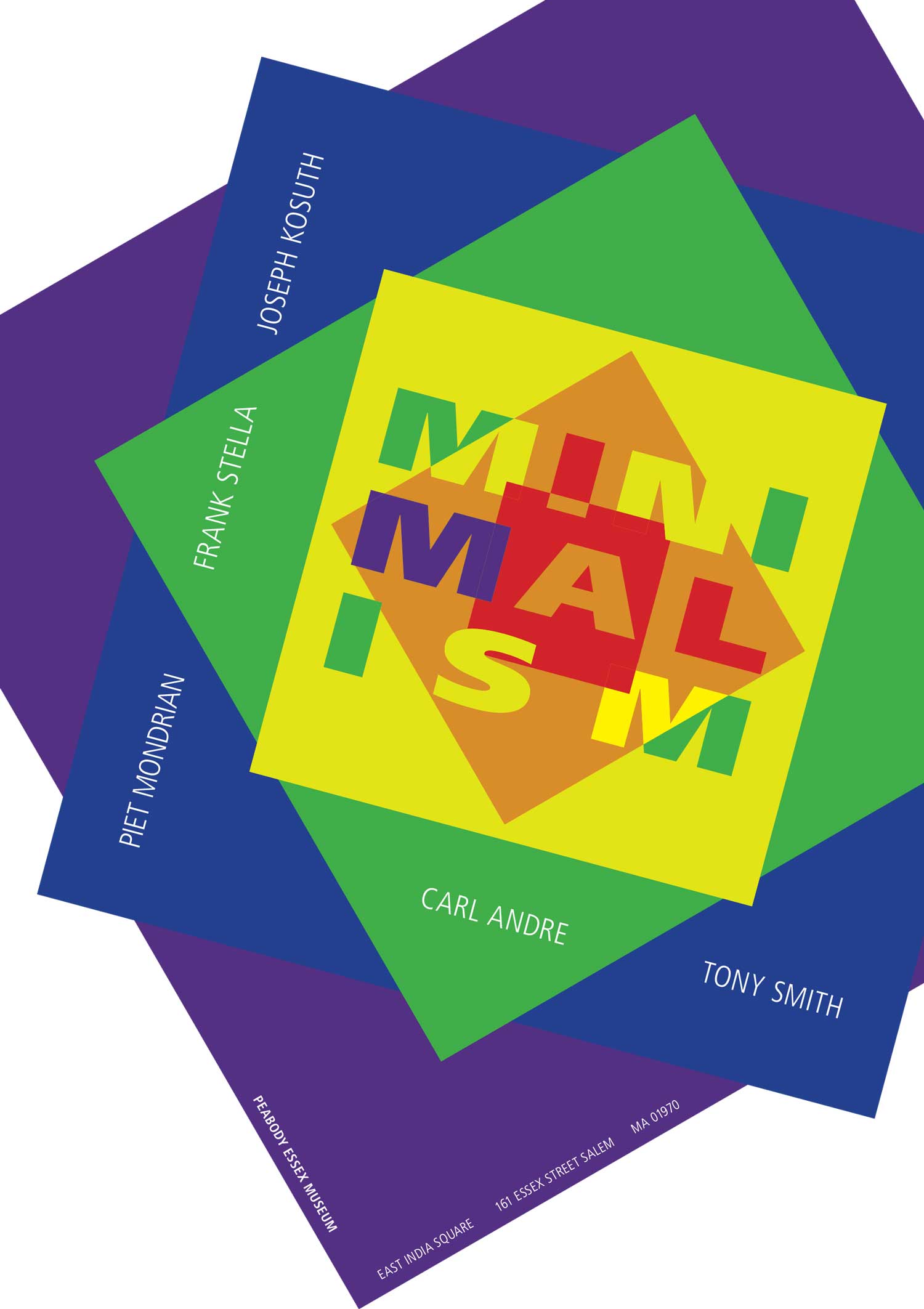
Nate Cioffi, Montserrat College of Art, Beverly, MA, Spring 2020
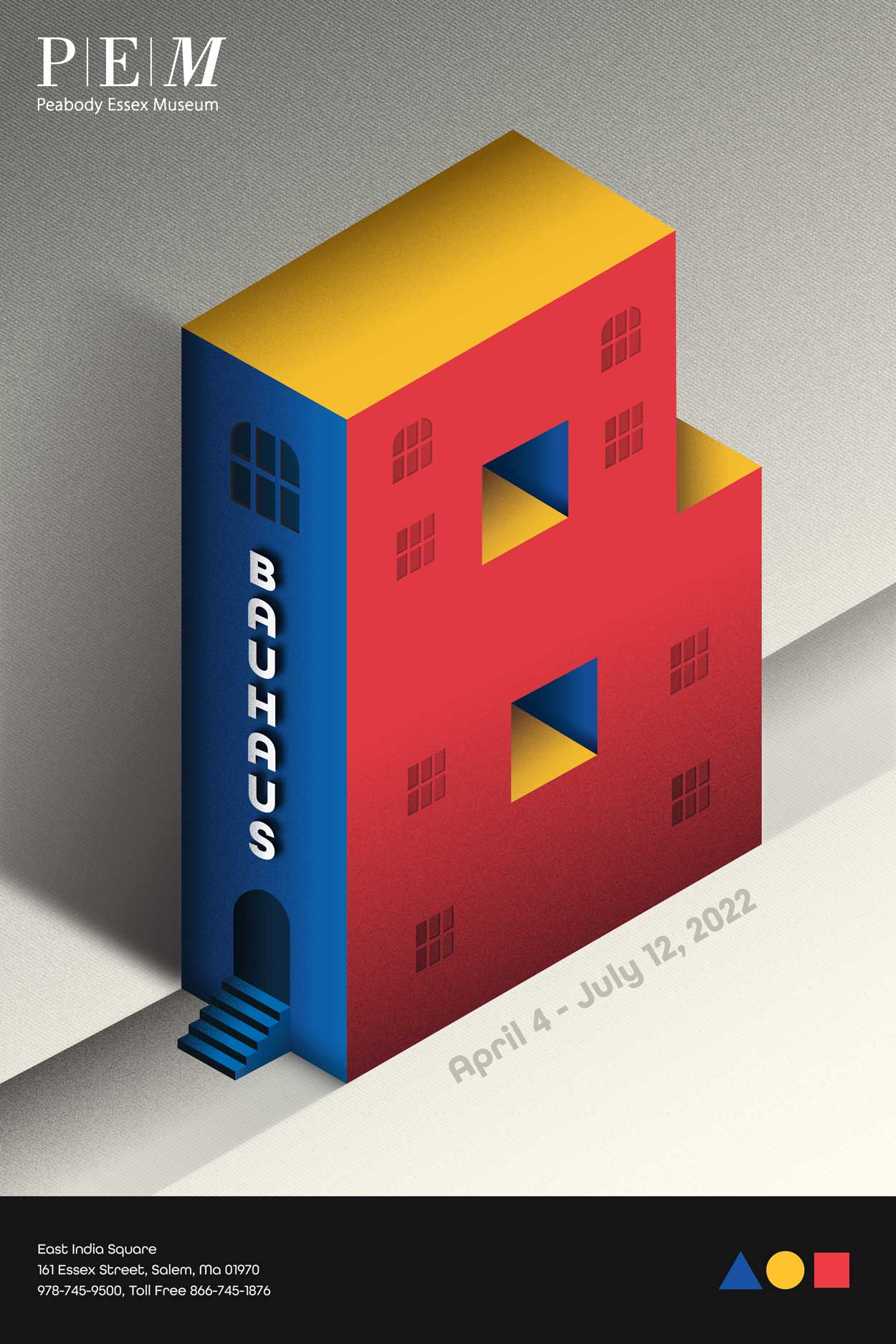
Gervin Rodriguez Bauhaus Poster, Montserrat College of Art, 2021
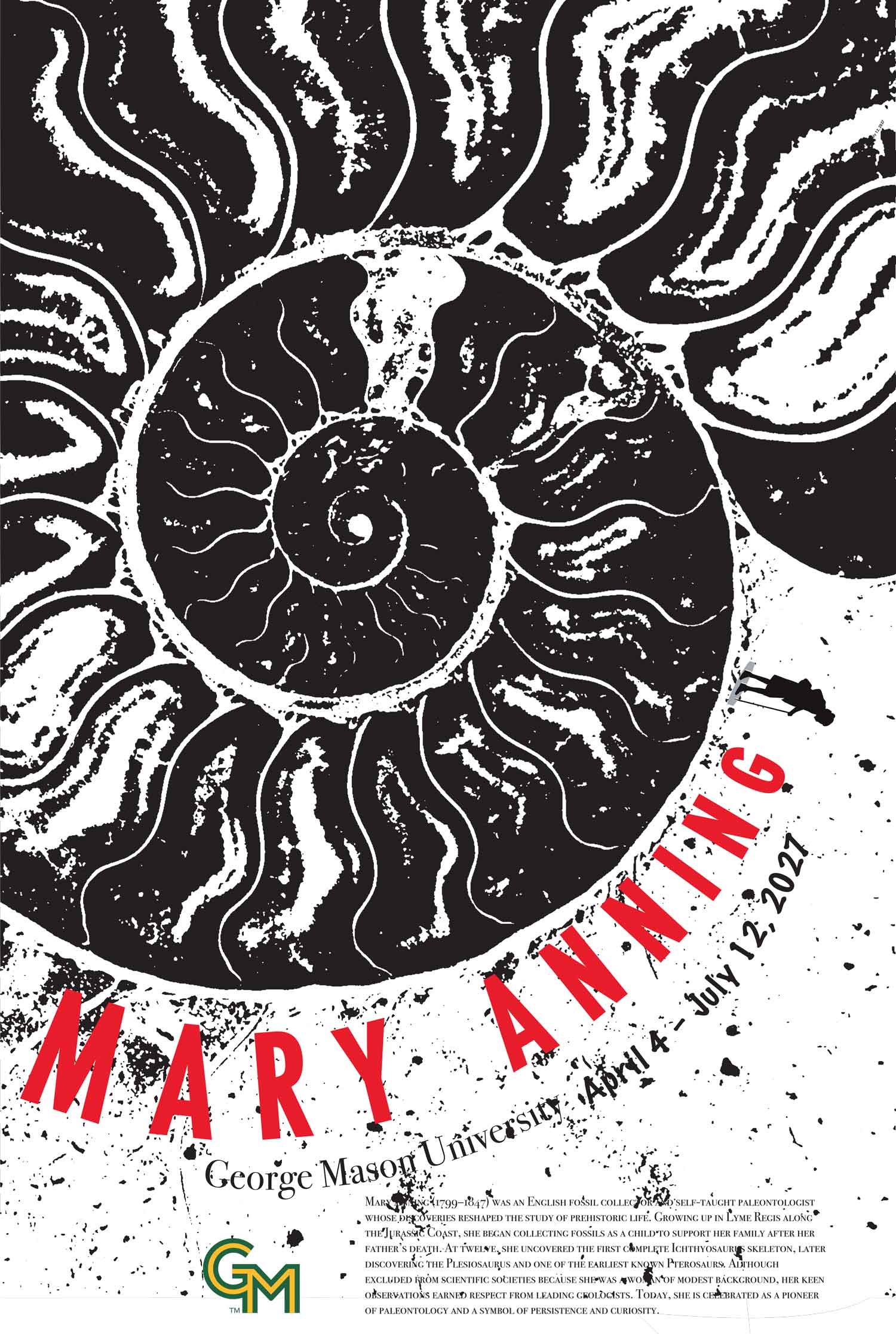
Ni Binglei, Fall 2025, George Mason University, Mary Anning